Observation of domestic military war movies: expanding the theme, digging deep into the theme and winning the audience with innovative expression
writing| Lin Lin
editUncle Mao
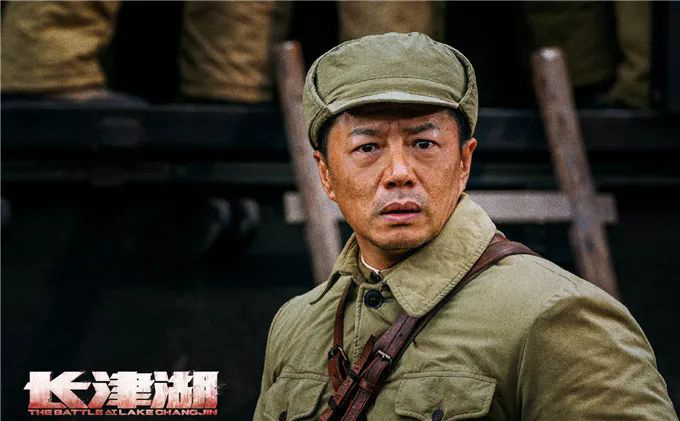
The Battle at Lake Changjin, a war blockbuster originally planned to be released in the near future, has been postponed due to the epidemic, but it is still one of the most anticipated films in the film market this year. In recent years, China filmmakers have created a number of popular military war movies.
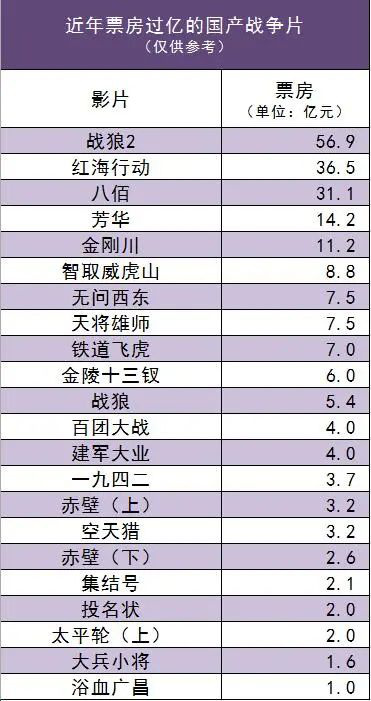
In 2017, Wolf Warriors 2, directed and performed by Jason Wu, not only set off a movie-watching craze at that time, but also made a box office achievement of 5.69 billion, which no other film can surpass so far. Another example is The Great Cause of Building the Army, Operation Red Sea and The Sacrifice, Hundred Regiments Battle, Wolf Warriors, Assembly, Taking Tiger Mountain Outward, flowers of war, The Eight Hundred and other films, all of which are outstanding in the schedule.
Looking back on the history of new China movies, military war movies have always been one of the main types, including: Traveling to the North, Dong Cunrui, Shangganling, flying tigers, Youth in War, Red Sun, Heroes and Children, Private Zhang Ga, Tunnel War, Mine War, Garland under the Mountain, Armageddon Series, The Great Turn Series, and The Great Turn.
According to experts in the industry, domestic war films have formed many unique expressions and forms through the continuous exploration of several generations of filmmakers. This type of film emphasizes the ideological content and value orientation of the film, reveals the success or failure of revolutionary struggle and the essence of social development with historical materialism, observes life with the creative method combining revolutionary realism and revolutionary romanticism, and writes and records the history of party history, military history, the history of New China and the history of revolutionary war with images, which is inspiring and morale-boosting, and constantly provides "hard food" for the broad audience.
Panoramic presentation of grand narrative
Record and show the glorious history of war
In military war films, one of the major techniques of expression is to adopt grand narrative to tell a certain war and a certain battle positively. Experts in the industry believe that this expression is mainly to comprehensively record and show the glorious war history.
Hook, a senior film expert, said that since the founding of New China, there have been many excellent films showing the frontal battlefield on the big screen, among which the series Armageddon, the Great Turning Point and the Great March filmed by Bayi Film Studio are the representative works of this kind of expression.
In 1991 and 1992, a series of films about the three major battles during the liberation war, Armageddon Liaoshen Campaign, Armageddon II: Huaihai Campaign and Armageddon III: Pingjin Campaign, were released one after another. The three films reappeared three decisive great battles in the Liberation War with magnificent and realistic momentum.
The trilogy Armageddon, as a magnificent war epic in China’s film history, has had a far-reaching influence in many fields, such as film, military affairs, culture and education, etc. This series of films shows the great decisive battle that decided China’s fate in a panoramic way. Instead of portraying many great historical figures, the film has shaped them in a rich three-dimensional way, allowing the audience to see the real life of the great men. The whole film involves more than 100 characters and uses countless human and material resources. Including 160 tons of explosives, 50 real tanks, 100 explosive cars, more than 1.7 million empty shells, etc., and a large number of military equipment such as artillery, planes and ships were used.
After the Armageddon trilogy, Bayi Film Studio released the Great Turning Point series in 1996-The Battle of the Great Turning Point in Southwest Shandong and The Great Turning Point into Dabie Mountain. Directed by Wei Lian, this series includes outstanding actors such as Lu Qi, Xuecheng Fu, Gu Yue, Sun Feihu, Sun Weimin, Lu Xi and Wu Jing. The film describes the story that in 1947, when the China Revolution was at a critical juncture, in order to smash the key attacks of Kuomintang troops on northern Shaanxi and Shandong Liberated Areas and reverse the war situation, Liu Deng’s army crossed the Yellow River south and advanced into Dabie Mountain. In an extremely difficult war environment, the central government’s strategic intention was realized, which led to a fundamental turning point in the situation of the Liberation War and the People’s Liberation Army entered the strategic offensive stage ahead of schedule.
The series "The Great Turn" is grand in scale and spectacular in scene, showing the intense tension of war scenes from multiple angles and levels. It is worth mentioning that, when filming the Battle of yangshan, we chose the commanders and soldiers in the headquarters to talk and laugh while drinking coffee, and the battlefield situation was conveyed to the audience by radio. This kind of expression technique can be described as unique, creating a unique situation and atmosphere, highlighting the commanders and soldiers’ demeanor of being well-planned generals, showing the thoughts and spiritual outlook of the older generation of proletarian revolutionaries, and showing that Liu Deng’s army has leapt thousands of miles into the Dabie Mountains.
The series "The Great March" includes four parts: The Great March: Liberating the Northwest, The Great March: Chasing the Southern Line, The Great March: Sweeping the Southwest, and The Great March: Fighting Nanjing, Shanghai and Hangzhou, which were released in 1996, 1997, 1998 and 1999 respectively. The film depicts the heroic spirit of Peng Dehuai, commander-in-chief of the Northwest Field Army, with a bleak style. Under his command, the PLA marched into the desolate and poor northwest and liberated the northwest. At the same time, it also gives a panoramic description of the process of the biggest battle in northwest China, Lanzhou Battle.
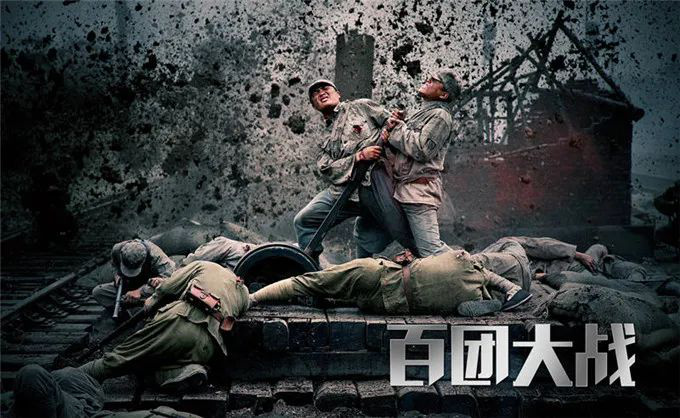
In recent years, China filmmakers have also produced a number of excellent war films showing the frontal battlefield. In 2015, The Hundred Regiments War, produced by Bayi Film Studio and China Film Co., Ltd., directed by Haiqiang Ning, written by Dong Zhe and starring Tao Zeru, Liu Zhibing and Yin Xiaotian, was released nationwide, with a cumulative box office of 400 million yuan.
The Hundred Regiments War in historical materials not only played an outstanding role in China’s anti-Japanese battlefield, but also had great significance in the world anti-fascist war, which changed the whole pattern of War of Resistance against Japanese Aggression. The production team chose the artistic means of film, hoping that more young people can understand this history through the big screen. The film recreates the truth of the headquarters’ decision-making and the truth of the fighting in the trenches from three levels: strategy, campaign and battle, and depicts a magnificent panorama of the war. In addition to the grand war scenes, the individual soldiers reflected in the film are also real, delicate and touching. No matter generals or soldiers, veterans or recruits, men or women, the charm and expression of characters come from the lively sense of reality. Peng Dehuai, Zuo Quan and other commanding generals are wise and courageous, and several props with human feelings make the characters more stereoscopic and warm.
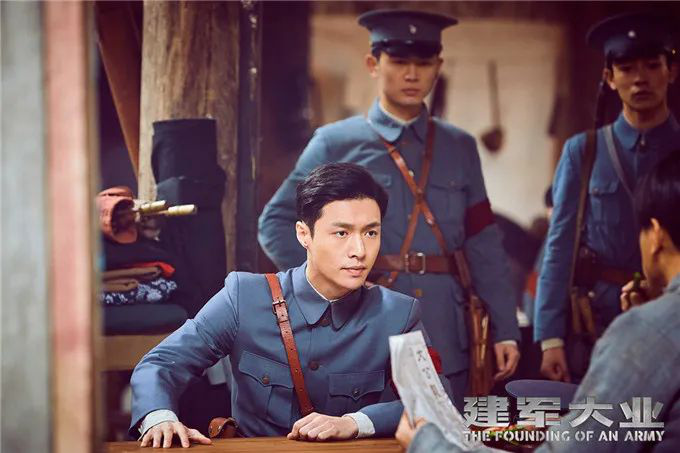
In 2017, The Great Cause of Building the Army, directed by Liu Weiqiang, tells the story that after the defeat of the first revolutionary civil war in 1927, the Communist Party of China (CPC) saved the revolution and held the Nanchang Uprising on August 1st of that year, thus creating the people’s army led by the Communist Party of China (CPC). The film depicts the process of famous battles such as Nanchang Uprising, Sanheba Campaign and Autumn Harvest Uprising in more space. Among them, the number of shots in a battle of Nanchang Uprising was nearly 3,000, and finally the war scenes in the whole play accounted for nearly 40% of the whole film.
In the same year, The Bloody Xiangjiang directed by Chen Li, starring Wang Wei, Jianfeng Bao, Xu Jian, Dong Yong, etc., comprehensively tells the tragic story that the officers and men of the 34th Division of the Red Army made great sacrifices to protect the Party Central Committee from crossing the Xiangjiang River and successfully breaking through the blockade in 1934. In order to shoot the real war scene, the crew used more than 7600 troops and 35000 people, and used 2 tons of TNT explosives and 80 tons of gasoline when shooting the bloody battle scene. The war scenes were all shot by actors on the spot.
An Lan, a director and screenwriter who has been engaged in the creation of war films for many years, told reporters that the war films that show the positive battlefield are divided into three levels: the strategic level, that is, whether to fight this battle or not; At the campaign level, how to command and win a battle; And how the grassroots, that is, the grassroots commanders and fighters fight.
"A series of grand narrative films represented by Armageddon series are aimed at writing history by war. The creators put the emphasis on the description of the strategic level. " An Lan believes that the greatest significance of such films lies in the true recording and reappearance of history.
Cut in from the micro
Tell people and things in the background of war
Rao Shuguang, president of the China Film Criticism Society, said that military movies can be divided into broad and narrow sense. The broad military movies include all military-related movies, which belong to military war movies, whether they directly represent war scenes or show the fate of characters in the background of war.
An Lan said that in the early days of the founding of New China, China filmmakers filmed a number of war films mainly about people. "These films focus on the grassroots commanders and soldiers and write the living conditions of people in real wars, which is very touching." In 1955, the film "Dong Cunrui" produced by changchun film studio was such a film. Although "Dong Cunrui" is a film about revolutionary war, the creator has devoted most of his pen and ink to portraying the character Dong Cunrui. What’s more, the film shows the growth track of the characters through carefully selected life segments, and shows the process of Dong Cunrui from immature to mature.
In 1958, the film "Five Heroes of Langya Mountain" produced by Bayi Film Studio tells the tragic story of five Eighth Route Army soldiers who jumped off the cliff in War of Resistance against Japanese Aggression to cover the transfer of party and government organs, troops and the masses, and fought with the Japanese until they ran out of ammunition. The film vividly shows the revolutionary heroic spirit of five Eighth Route Army soldiers who fought bravely and were not afraid of sacrifice, and the national integrity of being unyielding and dying.
Although the films "Tunnel Warfare" and "Mine Warfare" are military teaching films, the plot is still vivid and touching. For example, "Mine War" is based on the historical fact that Huangcun militia played a great role in the mine war, and it was handled simply and flexibly. The bravery, wisdom and perseverance of the militia heroes are in sharp confrontation with the cunning, danger and cruelty of the Japanese aggressors, and they show their respective image characteristics in repeated contests.
What impressed Hook most was Private Zhang Ga produced by Beijing Film Studio in 1963. The film is adapted from Xu Guangyao’s novel Private Zhang Ga, which tells the story of Xiao Gazi becoming a veritable Eighth Route Army soldier under the guidance of Uncle Zhong, Uncle Luo, the district captain and grandma. "Although it is a war film, the film is well integrated with the elements of light comedy, and the sense of proportion is in place." Hooke said that the success of Private Zhang Ga benefited from War of Resistance against Japanese Aggression’s victory and the filmmakers’ double confidence in the creation of war films.
In Rao Shuguang’s view, for the creation of China’s military movies, we should pay special attention to the characterization, especially the characterization in the war. "It is often the characters and emotions in the film that can effectively attract the audience." He told reporters that with the continuous improvement of China’s film industrialization level. Film special effects technology provides better audio-visual effects for war films. At the same time, excellent characters can make military war films more likely to resonate with the audience.
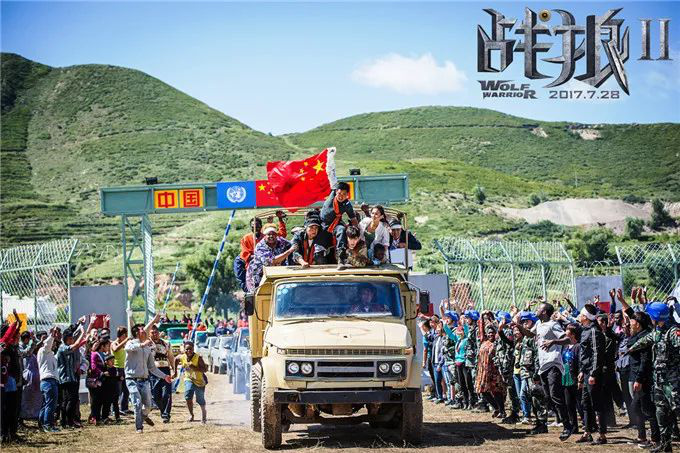
In Wolf Warriors and Wolf Warriors 2 directed and performed by Jason Wu, the image of Cold Front, a modern special force in China, was created. Wolf Warriors soon became a dark horse after it was released in 2015. It broke 100 million in three days, 200 million in four days and 300 million in seven days, which surprised many people. In the summer of 2017, Jason Wu’s self-directed and self-directed Wolf Warriors 2 quickly showed its "dominance" in the market. The box office record of 5.69 billion yuan has been maintained to this day. In the Wolf Warriors series, Jason Wu successfully created an individualistic hero similar to that in Hollywood movies, but the core of the film is still to praise the spirit of collectivism and give every China audience confidence and pride.
In 2016, My War, directed by Peng Shun, written by Liu Heng and starring Liu Ye and Wang Luodan, tells the legendary stories about love, friendship and affection of a group of ordinary and great young people who resolutely went abroad to defend their country. The film not only shows the cruelty and realism of the war, but also shows the love, affection and friendship, and creates group portraits of Sun Beichuan, Meng Sanxia, Zhang Luodong, Wang Wenjun and Liu Shiwen.
In 2018, the film Eight Sons, directed by director Gao Xixi, tells a touching story of a mother who sent her eight sons to the battlefield in the 1930s in southern Jiangxi, followed the Communist Party of China (CPC) and fought bloody battles for the bright new China. "Eight Sons" let the true story that happened in the old revolutionary base areas go to China and the world, and let everyone know the feelings and mental state of a group of ordinary peasants who went on and on for national interests and beliefs in the revolutionary war years in China.
In addition, besides The Eight Hundred The Sacrifice, which was filmed and released during the epidemic last year, The Battle at Lake Changjin, who temporarily withdrew his files this summer, Zhang Yimou’s Sniper, Cheng Er’s Unknown, and Railway Hero, and other new films with similar themes will also come out soon.
Making a good war film needs to respect history and pay attention to details.
When talking about how to make a good film, An Lan, who has created war films for most of his life, particularly emphasized that creators should respect history and pay attention to details. He recalled that the reason why early China filmmakers were able to produce a large number of excellent war films was not only their excellent artistic accomplishment, but more importantly, many of them had personally experienced the war. Even if they had not experienced the war, before filming, many of their masters went to the army to experience life. "In Bayi Factory, it is a tradition and our advantage to experience life before shooting." An Lan said that to experience life in the army, you can not only learn how to hold a gun and other details, but more importantly, know what a soldier is and what a war is, which is very important for the creation of war movies. Before filming "Wolf Warriors", Jason Wu spent 18 months at the grassroots level of special forces to experience life. This is also the basis of the film’s success.
An Lan said that the details of war scenes are the touchstone of a war movie. Today’s war movies are really better with the help of special effects technology, but some young creators often make common sense mistakes in some details because of their lack of experience in military life. "From the formation during the war, to the details of the soldiers’ dry food bags and bullet bags, and then to the details of weapons, although they are all minor flaws, it is precisely in these details that the key to an excellent work is often a few minor flaws, which destroys the overall authenticity of the film."
In addition, he also said that there are still few institutions that provide guns, tanks and other props for war films. "Now money can’t buy it, and I hope that the industrial chain that supports war films will be more complete in the future." In addition to the details, it is more important to respect and fear history, and to achieve "big things are not empty, small things are informal" in shooting.
Domestic war films still need to explore the theme and dig deep into the theme
Rao Shuguang said that war movies are natural mainstream blockbusters. In recent years, a new generation of China filmmakers, on the basis of inheriting the fine tradition of domestic war films, have made war films in the new era by using new expressions and industrialized means. He believes that domestic war films still have rich room for expansion.
Hooke believes that films such as Shangganling and Garland under the Mountain have portrayed many excellent characters under the background of war, and even revealed the complexity of some historical and social realities. These are all examples of war movies. An Lan also said that if we can take the war as the background to film the emotions and individual destiny of ordinary people under the war, it will probably become an excellent work, but such films also put forward higher requirements for filmmakers.
Hook told reporters, such as "Assembly" and "Nanjing! Nanjing! "flowers of war" and other films not only show the cruelty of war, but also make richer expressions and reflections on war, which is also an attempt to create domestic war films. Rao Shuguang said: "Although people are controversial about these new attempts, they have also contributed to the development of ideas for war film creation."
The cruelty of war, the reflection on war, and the affection, love and friendship between people during the war years are all common feelings of mankind. "Shooting war films that express the above content will have higher requirements for creators, but these films are also works that are easier to go global." An Lan said.
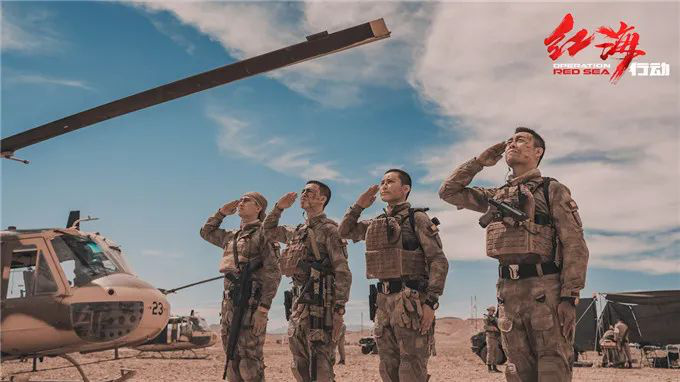
In Hooke’s view, China’s war films have two main tasks: one is to remember history, cherish peace and inspire people’s patriotic feelings; In recent years, with the strengthening of China’s national strength, war films also shoulder the mission of enhancing national self-confidence and reflecting the responsibility of a big country. Whether it is the Wolf Warriors series or Operation Red Sea, the dignity, responsibility and spirit of a great country run through it. These films not only reflect the development and strength of China’s army in recent years, but also highlight the heroism and international humanitarian spirit of China soldiers who love peace and are not afraid of sacrifice, and show national interests, national spirit, national image and China glory.
During the interview, insiders said that in the future, domestic war films can also incorporate more elements, such as using science fiction to present them.
statement
Welcome to share with friends.