Some legal professionals in Hong Kong actually staged a silent procession in black to protest against the interpretation of the law.

[Observer Network Synthesis] On the 7th, the National People’s Congress Standing Committee (NPCSC) unanimously passed the interpretation of Article 104 of the Basic Law. According to a report by Hong Kong Dagong. com on November 9th, the China-Australia Law Exchange Foundation held a press conference on the 8th to support the NPC’s interpretation, arguing that the interpretation filled the vacuum of the common law and did not affect the judicial independence of Hong Kong, stressing that the interpretation was for the benefit of Hong Kong and national sovereignty, and the result was beneficial to the whole Hong Kong society. The Law Society of Hong Kong also issued a statement expressing full confidence in the proper operation of Hong Kong’s judicial system.

However, some legal professionals in Hong Kong were dissatisfied with this and staged a protest.

On November 8, the China-Australia Law Exchange Foundation emphasized that the National People’s Congress interprets the law for the benefit of Hong Kong and safeguarding national sovereignty/source: Dagong.com.

He also took out the tricks of marching and silence.

According to Hong Kong Ming Pao reported on November 8, following the statement of the Hong Kong Bar Association expressing dissatisfaction, the legal profession in Hong Kong launched a black dress parade at 5: 45 pm on the 8 th, from the High Court in Admiralty to the Court of Final Appeal in Central.

The March was initiated by Guo Rongkeng, a member of the Legislative Council of Hong Kong Citizens Party, and attended by many legal professionals, including former chairmen of the Bar Association, Martin Lee and Yu Ruowei, chief lecturer of the School of Law of the University of Hong Kong, and barrister Margaret NG. They just marched in silence and didn’t shout slogans along the way. By 6 pm, there were hundreds of people on the scene, and most of the participants were dressed in black.

It is said that about 2,000 people participated in the parade, most of whom were legal professionals. The police said that there were 1,700 people at the peak.

The tail of the procession arrived outside the Court of Final Appeal at 6: 48 pm. All the marchers were declared silent for three minutes by Martin Lee. Later, after Martin Lee paid a simple tribute to the marchers, the procession ended in silence.

As the leader of the opposition in Hong Kong, Martin Lee often goes abroad to "criticize Hong Kong" and takes the initiative to attract foreign forces to intervene in Hong Kong as a "common practice". In recent years, he has frequently gone out to "ask for help" on the topic of political reform. However, he was not given the cold shoulder once or twice in a foreign country. According to the Hong Kong Sing Tao Daily reported on October 22nd, Martin Lee and the former Chief Secretary for Administration of Hong Kong, Anson Chan, were scheduled to meet with New Zealand Deputy Prime Minister english on October 18th, but they received an email on the evening of 17th and were told to cancel the arrangement. Lin Dahui, a former member of the Legislative Council of Hong Kong, criticized this behavior, saying that it is absolutely understandable that a family has different internal opinions, but it is absolutely wrong to intervene in Hong Kong’s internal affairs with the help of foreign forces, and most Hong Kong people will not accept and agree with it.

Former Chairman of the Hong Kong Bar Association, founder of the Democratic Party, Martin Lee (right), Member of the Legislative Council of Hong Kong Citizens Party, Guo Rongkeng (left)/Source: Hong Kong Ming Pao

Hong Kong legal profession black silent procession scene/Source: Hong Kong Ming Pao

Hong Kong barrister Margaret NG/Source: Hong Kong Ming Pao

Martin Lee said that this interpretation of the law has impacted the rule of law and the Legislative Yuan in Hong Kong. The Standing Committee of the National People’s Congress has the right to interpret the law, but it has no right to interpret the laws of Hong Kong, including the Oaths and Declarations Ordinance. The NPC is helping the Legislative Council of Hong Kong to legislate and amend laws.

Professor Chen Wenmin, former dean of the Law School of the University of Hong Kong, told the US media before the March that the impact of the NPC interpretation on Hong Kong’s judicial system was "the most severe", especially before the Hong Kong High Court took the oath to review the judgment. This interpretation was a solution to the problems that Hong Kong courts could have solved, which "overthrew the rule of law in Hong Kong" and seriously weakened the confidence of the international community in Hong Kong’s "one country, two systems".

Before the March began, Cherish Group and other groups gathered outside the High Court to support the NPC’s interpretation of the law and demanded that Liang Songheng and You Huizhen, two members of the "New Youth Deal", be disqualified.

Earlier, the Hong Kong Bar Association issued a statement on the 7th, saying that it deeply regretted the NPC’s interpretation of the law.

Chen Wenmin, former Dean of the Law School of the University of Hong Kong/Source: Hong Kong Ming Pao

Hong Kong legal profession: Interpretation of the law is not illegal construction, and the power of interpretation comes from the Constitution.

According to the news of Dagong.com on November 8th, the China-Australia Law Exchange Foundation held a press conference on the 8th, attended by barristers Manguo and Ding Huang, and three lawyers, namely Qian Zhiyong, Ye Xinying and Jian Songnian.

Ma Enguo, chairman of the Foundation, said that the Court of Final Appeal had stated that the interpretation of the the National People’s Congress Standing Committee (NPCSC) law was binding and overriding to all courts in Hong Kong, and after the previous interpretation of the law, the court’s judgment did not point out that the interpretation would affect the judicial independence of the courts in Hong Kong. He criticized people in the legal profession, including the Bar Association, for pointing out that judicial independence was affected.

Marne: Governing "Hong Kong Independence" by Law

The Commonwealth of Man also pointed out that in common law case law, there is no case in local, British, Australian or even Canadian case law about how to take an oath to be qualified, so the judge has no precedent to follow. He can only make a judgment based on "refusing or ignoring" the oath in Article 21 of the Oaths and Declarations Ordinance and "taking an oath according to law" in Article 104 of the Basic Law, which requires inference to explain what "taking an oath according to law" means, and this interpretation has filled this piece of law.

Ma Enguo believes that from the national level, it is also necessary to interpret the law, because the words and deeds of Liang Songheng and You Huizhen, the new youth policy, unreservedly bring out anti-China and "Hong Kong independence" thinking, which represents "Hong Kong independence" in Hong Kong politics. If the central government does not express its position, it will have an impact on national sovereignty and territorial integrity. He emphasized that the state governs the country according to law and "Hong Kong independence" by law, so that laws must be followed and law enforcement must be strict. If the "Hong Kong independence" action is further escalated, he does not rule out that the central government will take action to deal with "Hong Kong independence".

Jian Songnian refutes the theory of "unauthorized construction"

As for some opponents who say that the interpretation of the Basic Law is a modification and unauthorized construction of the Basic Law, Jane Songnian, a member of the Chinese People’s Political Consultative Conference, refutes that the interpretation of the Basic Law does not add, delete or modify a word in Article 104 of the Basic Law, but only explains the meaning of the word "law" in "according to law". "Wouldn’t it be more convincing for legislators to explain the original legislative intent themselves? How can it be said that it is illegal? "

Asked if the Oaths and Declarations Ordinance can deal with the swearing-in of Members, is it still necessary to interpret the law? In a radio interview yesterday, Chen Hongyi, a member of the Basic Law Committee, said that the central government’s considerations are not only legal, but also political, including that those who advocate "Hong Kong independence" will enter the Legislative Council, which will impact the bottom line of "one country, two systems" and the central government will release information. If "one country, two systems" continues, it will not tolerate transcendence or challenges.

In addition, the Law Society of Hong Kong also issued a statement on the interpretation of the Basic Law, expressing its recognition that the power of interpretation of the Basic Law belongs to the National People’s Congress Standing Committee (NPCSC), and it is full of confidence that the judicial system of Hong Kong can operate properly under the "one country, two systems" principle.

Political and legal experts: a heavy blow to the "independence" flame

Yesterday, the Hong Kong and Macao Basic Law Research Center of Shenzhen University held an academic salon to discuss the NPC’s decision to interpret the law. Experts and scholars in Shenzhen and Hong Kong have said that the NPC’s interpretation of the law is an important part of the rule of law in Hong Kong, and its legitimacy, authority and legitimacy are beyond doubt. This NPC interpretation is very timely and necessary, which not only conforms to Hong Kong’s public opinion of opposing "Hong Kong independence" and safeguarding national sovereignty, but also deals a heavy blow to the arrogance of "Hong Kong independence" elements. Some experts clearly pointed out that the interpretation of the law is not an act divorced from the legal system and cannot be "demonized". Refusing the interpretation of the law by the National People’s Congress is a denial of national sovereignty.

Zou Pingxue, director of the Hong Kong and Macao Basic Law Research Center of Shenzhen University, pointed out that this interpretation of the NPC clarified the legislative intent and legal principles of Article 104 of the Basic Law, which can effectively solve the current legal disputes caused by the swearing-in storm of the elected members, better regulate all future SAR candidates for statutory public office and their swearing-in behaviors, and legally build a "firewall" to strictly curb any illegal acts such as deliberately violating the statutory requirements of swearing-in, flouting the swearing-in procedure according to law, and even advocating "Hong Kong independence" to insult the country and the nation.

Zou Pingxue said that the NPC’s interpretation of the law used legal weapons to punish the illegal acts of "Hong Kong independence" in a timely manner according to law, which dealt a heavy blow to the arrogance of "Hong Kong independence" elements, helped restore the damaged rule of law order, effectively safeguarded "one country, two systems" and effectively safeguarded the authority of the Constitution and the Basic Law. The interpretation of the law by the National People’s Congress once again shows the central government’s initial intention of adhering to "one country, two systems" and its determination to keep "one country, two systems" unchanged. It is unambiguous and unwavering in fulfilling the constitutional responsibilities entrusted by the Constitution and the Basic Law and exercising the constitutional powers entrusted to the central government by the Constitution and the Basic Law.

Guo Zhenglin, deputy director of the Shenzhen Training and Research Center of the Liaison Office, said that the fundamental purpose of the central government’s policies towards Hong Kong is to safeguard national sovereignty, security and development interests and maintain Hong Kong’s long-term prosperity and stability. This is also the core requirement and basic goal of the principle of "one country, two systems". Every interpretation of the law by the central authorities is a constitutional and legal act to revolve around and implement this purpose. Practice has proved that every interpretation of the Basic Law by the Central Committee has solved the problems that the Hong Kong SAR itself cannot solve, ensured the overall stability of Hong Kong and promoted the healthy development of Hong Kong’s politics and economy. This interpretation of the Basic Law by the National People’s Congress once again clarified the bottom line of "one country, two systems", exposed the essence of "Hong Kong independence" forces splitting the country and destroying Hong Kong, determined the political rules of public officials in the SAR, and paved the way for Hong Kong to make every effort to govern.

Kin-Chung Ho, assistant research director of the Hong Kong Policy Research Institute and former political assistant to the Director of the Development Bureau of the Hong Kong SAR Government, said that the interpretation of the law is not an act divorced from the legal system and cannot be "demonized". Refusing the NPC to interpret the law is a denial of sovereignty. As for some people who think that the interpretation of the NPC affects judicial independence, Kin-Chung Ho thinks that as long as a judge can judge a case within the scope of his duties with his free will, it is judicial independence. Whether his judgment will be overturned by a higher court or the interpretation of the NPC has nothing to do with independence.

As for the process of court hearing, should the Standing Committee of the National People’s Congress interpret the law? Kin-Chung Ho said that the NPC Standing Committee’s action during the trial was really a last resort and would not set a so-called "precedent".

The power of interpretation of the NPC comes from the Constitution.

Ling Youshi, former senior research director of the Central Policy Unit of the Hong Kong SAR Government, pointed out that the NPC’s timely and active interpretation of the law has set a very good practice model, and what needs to be concerned is whether the interpretation of the law can produce more positive and accurate effects in the future. She pointed out that as for the commissioner for oaths, according to Article 43 of the Basic Law, the commissioner for oaths should be the Chief Executive. Many of the rules of procedure of the Legislative Council are inconsistent with the provisions of the Basic Law and should be amended. Lin Qibin, a partner of Dong Wuxie Hong Kong Law Firm, said that the NPC’s power to interpret the law comes from the Constitution, and the NPC has the right to interpret the Basic Law, rather than interpreting it according to the authorization of the Basic Law. This is a top-down relationship and cannot put the cart before the horse.

Interpretation of the Basic Law conforms to the fundamental interests of Hong Kong and safeguards national sovereignty.

Li Fei, Deputy Secretary-General of the National People’s Congress Standing Committee (NPCSC), insisted at a press conference on November 7th that "the National People’s Congress does not interfere with the judicial independence of Hong Kong", and that the interpretation of the law is to uphold the law, stressing that the independent judicial power and the power of final adjudication of the Hong Kong Special Administrative Region are endowed by the Basic Law, and there can be no judicial independence beyond the Basic Law.

Leung Chun-ying, the Chief Executive of Hong Kong, held a press conference on November 7th to express his support for the interpretation of the Basic Law by the National People’s Congress. The Hong Kong SAR Government and the general public must stop any act that deliberately violates the above-mentioned (oath) provisions, flouts the swearing-in procedure according to law, or even takes the opportunity to insult the nation and advocate splitting the country or sovereignty.

A spokesman for the Hong Kong and Macao Affairs Office said on the 7th that "Hong Kong independence" elements would never be allowed to enter the organs of political power, and the head of the Liaison Office also said that the interpretation of the law would help to resolve the disputes caused by some members-in-waiting of the Hong Kong Legislative Council swearing in violation of the law, safeguard national security, crack down on and contain the "Hong Kong independence" forces, and ensure that the practice of "one country, two systems" in Hong Kong will not be distorted.

In addition, the Hong Kong media also supported the NPC’s interpretation of the Basic Law, believing that this interpretation was not only timely, but also the best way to completely resolve related disputes. Hong Kong people also organized rallies to support the NPC’s interpretation of the Basic Law.

In addition, in response to a statement made by the Taiwan Province Mainland Affairs Council calling on the mainland to keep its promise to Hong Kong, the Taiwan Affairs Office of the State Council responded strongly on the 8th, saying that we firmly oppose the Taiwan Province authorities making irresponsible remarks, confusing right and wrong and deliberately misleading. Relevant parties in Taiwan Province should stop any words and deeds that interfere with the implementation of "one country, two systems" and undermine the prosperity and stability of Hong Kong.

Recently, British and American media also expressed their "views" on the NPC’s interpretation of the law. The US implied disappointment, and the British media falsely called the NPC’s interpretation "the beginning of the end of Hong Kong". In response, the Ministry of Foreign Affairs responded strongly that Hong Kong affairs belong to China’s internal affairs and no foreign country should interfere. This interpretation is in the fundamental interests of Hong Kong. China hopes that the international community and relevant countries will recognize the true face of the "Hong Kong independence" forces, fully understand the necessity and rationality of China and the National People’s Congress Standing Committee (NPCSC)’s interpretation of the Law, support the central government of China and the government of the Hong Kong Special Administrative Region in defending national sovereignty, security and unity, and safeguard the long-term prosperity and stability of the Hong Kong Special Administrative Region.

(Observer Network integrates Hong Kong Ming Pao, Dagong.com, etc.)

This article is an exclusive manuscript of Observer. The content of the article is purely the author’s personal opinion, and does not represent the platform’s view. It shall not be reproduced without authorization, otherwise legal responsibility will be investigated. Pay attention to the observer network WeChat guanchacn and read interesting articles every day.

Beijing: The debugging of the points settlement declaration system was completed during the year.

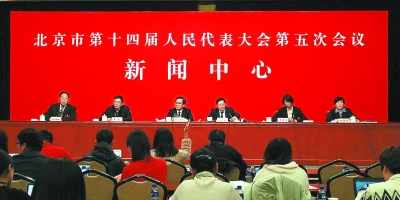
  Yesterday afternoon, the fifth session of the 14th Beijing Municipal People’s Congress held its first press conference. The leaders of the municipal deep reform office, the municipal editorial office, the municipal development and reform commission, the municipal state-owned assets supervision and administration commission, and the Zhongguancun Management Committee answered the reporters’ questions around the theme of "deepening reform and promoting development".

  Streamline work

  Focus on cleaning up the work certificate between departments.

  "Last year, there was a strong reaction against the masses ‘ Wonderful proof ’ Problems, unified cancellation and adjustment of 74 certification items required by the municipal government departments at the grassroots level, involving health, medical care, housing, employment, schooling and many other daily affairs of citizens. " Wang Jun, deputy director of the Municipal Organizing Office, introduced the measures taken by Beijing to streamline the work flow in 2016, saying that the masses reflected that some grassroots organizations had proved "too many, strange, chaotic and false", and the city conducted a special study on this. Taking Guangwai Street and three communities as the breakthrough point, we dissected the sparrow, consulted the work records of streets and neighborhood committees in one year, and repeatedly communicated and coordinated with relevant departments to confirm the name of the certificate, the issuing unit, the required unit, the purpose and function, the annual acceptance volume, the setting basis, the competent department, the existing problems, and the cleaning opinions. Wang Jun said that according to the investigation, there are more than 200 certificates issued by grass-roots units in Beijing at ordinary times, and the first batch of 74 certificates issued by municipal government departments were cancelled and adjusted. For example, the inspection of the marital status of the floating population in Beijing no longer requires the township and town governments where the household registration is located to issue certificates, but can be inquired through the national electronic platform for marriage and childbearing of floating population; When unemployed people apply for low-rent housing, they no longer need to submit certificates issued by social security.

  Although 74 certificates required by municipal units have been cancelled, some have not been cancelled. Wang Jun said that the remaining certificates are still under study, and some will be cancelled gradually. On this basis, the certificates issued by district-level government departments at the grassroots level are also being cleaned up. At present, 16 districts are undergoing a comprehensive clean-up, and most districts have been cleaned up, with a number of about 48, which will be announced in a centralized manner recently.

  In fact, it is not only the masses who have to issue a lot of certificates to do things, but also between government departments. Wang Jun said that during the clean-up process, it was found that municipal government departments had to issue certificates to each other, which was a new situation. This year, we will focus on cleaning up the certificates issued by departments. Of course, cleaning up is not the purpose, but the ultimate purpose is to facilitate the masses.

  "In terms of facilitating the masses to do things, we will also develop online services this year, especially through mobile phones." Wang Jun said that this year, a number of public service items should be put online, and everyone should handle them directly in the online government service hall; It is necessary to launch a number of public service matters closely related to the work and life of enterprises and the masses, and handle them directly at mobile terminals; It is necessary to package a number of interrelated public service matters involving multiple departments, levels and links and handle them directly online.

  Integral settlement

  The application system was debugged this year.

  Whether the points can be settled as soon as possible is a topic of concern to many foreign workers in Beijing. Li Sufang, deputy director of the Municipal Development and Reform Commission, said that the application system for settlement of points in Beijing is under construction, which involves 13 categories, 29 indicators and more than 30 departments. At present, the criteria for determining the settlement of points are being clarified, and the process is being further standardized.

  Li Sufang said that the point settlement policy focuses on the permanent residents who have been working and living in Beijing for a long time, and the social concern is high. Everyone has also put forward many suggestions. It can be said that the formulation of the policy has condensed social wisdom. In addition, everyone pays attention to fairness, justice and openness, and the handling of the situation should be ensured to be implemented in the sun. The indicators of the points settlement system should be unified and open, the procedures should be strict, and the departments involved should be networked to ensure effective information. Judging from the goal set by the human resources and social security department, it is also to ensure the disclosure of information and let applicants run less.

  "Before the official launch of this system, a special information release will be held, and a convenience service manual will also be issued to facilitate applicants." Li Sufang said that the criteria for the settlement of points are open and the procedures are open. In the specific review process, under the condition of protecting the privacy of applicants, the points will be publicized online, subject to social supervision, and ensure openness and transparency.

  The reporter learned from the person in charge of the relevant office of the Beijing Municipal Bureau of Human Resources and Social Security that the human resources and social security department is developing and debugging the system of settlement of points, which is an information system that provides points settlement services for talents. This system will be debugged within this year, and will be put into operation in due course in consultation with the Municipal Development and Reform Commission and in accordance with the unified deployment of the whole city. By then, Beijing will officially carry out the actual operation of the settlement of points.

  Price adjustment plan

  Water and electricity has no plans to adjust its price this year.

  The price of water and electricity is closely related to the lives of citizens. Li Sufang, deputy director of the Municipal Development and Reform Commission, said at the press conference that there is no plan to adjust the price this year.

  "The price of water and electricity is a concern of the general public. Since 2012, Beijing has accelerated the pace of water and electricity price reform in the residential sector. The water and electricity used by residents have established a ladder price policy, which will be guaranteed to be implemented normally this year, and there is no plan for price adjustment. " Li Sufang made the above remarks when answering a reporter’s question.

  In response to the issue of medical reform, Li Sufang said that the current medical reform has entered the deep water area, with the goal of improving the level and quality of public hospital services and improving better medical services for everyone. As for the price adjustment in medical reform, the public need not worry too much. Even though the cost of surgery, nursing and bed may increase somewhat, the cost of examination, medicine and consumables will decrease, and the overall medical expenses will not increase. In other words, there may be individual differences, but the total amount is balanced, which is proved by practice in five pilot hospitals.

  With Zhongguancun exploring the pilot project of evaluating the permanent residence points of foreign talents in China, foreign talents also have a convenient policy to apply for green cards. Guo Hong, director of Zhongguancun Management Committee, said that up to now, a total of 45 foreign talents have received letters of recommendation for the evaluation of permanent residence points of Zhongguancun foreign talents in China.