2019 Hangzhou "Zhiyong Qiantang": the integration of intelligent things and things, welcoming the new era of intelligence.
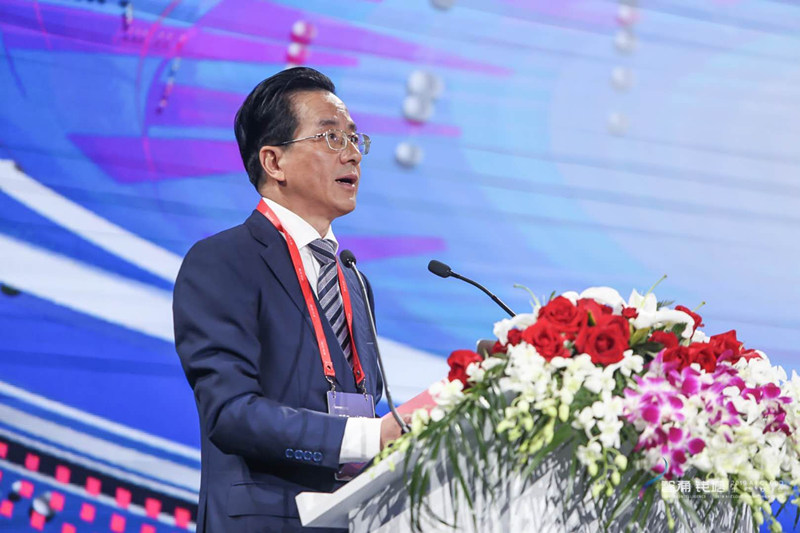
Chen Weiqiang, Vice Mayor of Hangzhou, Zhejiang Province
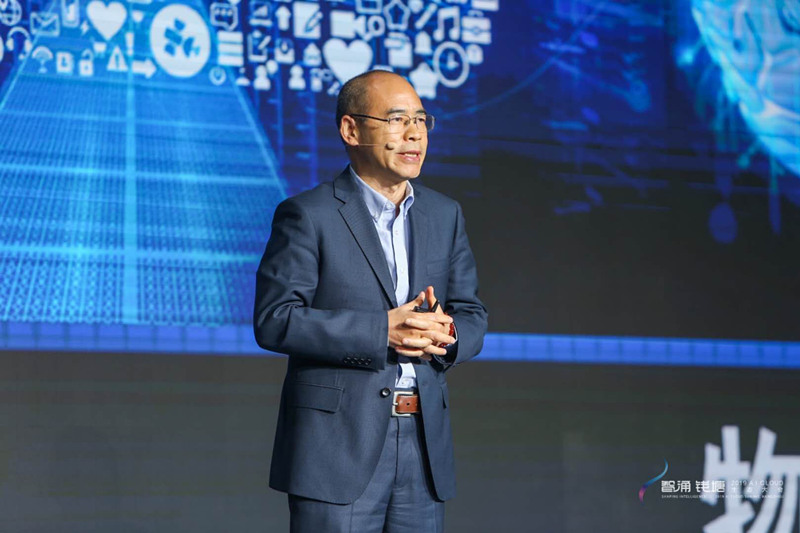
President Hu Yangzhong of Hikvision
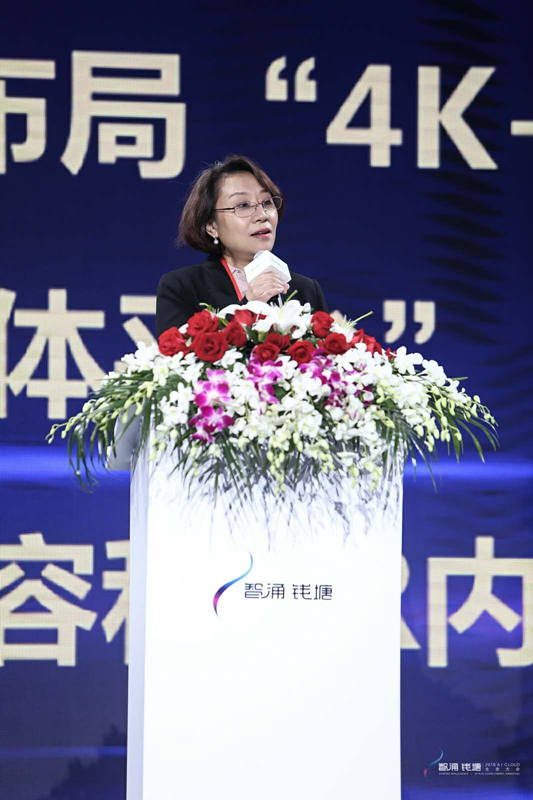
Deputy general manager of CCTV
CCTV News:On March 29th, the "Zhiyong Qiantang" 2019 AI Cloud Ecological Conference was held in Hangzhou. The conference was hosted by Hangzhou Municipal People’s Government, supported by Zhejiang Provincial Department of Economy and Information Technology, hosted by Hangzhou Economic and Information Technology Bureau, Hangzhou Binjiang District People’s Government and Hangzhou Hikvision Digital Technology Co., Ltd., and co-organized by Seagate Technology and Intel (China) Co., Ltd.
Chen Weiqiang, Vice Mayor of Hangzhou, and Li Min, Chief Engineer of Zhejiang Economic and Information Technology Department attended the summit and delivered speeches. Academician of China Academy of Engineering, Chairman of China Automation Society, IEEE Fellow, Professor Zheng Nanning of Xi ‘an Jiaotong University, Hu Yangzhong, President of Hikvision, Pu Shiliang, Bi Huijuan and Xu Ximing, Senior Vice Presidents of Hikvision, Wan Li, Safety Expert of Hikvision, Lin Yuanqing, Founder and CEO of Aibee, Zhang Yu, Chief Engineer and Chief Technology Officer of Intel China Internet of Things Division, and Wu Yunkun, President of 360 Enterprise Security Group gave keynote speeches.
In addition to the main meeting, the summit set up five open sub-forums and one roadshow activity, namely, the Urban Intelligence Forum, the Public Service Forum, the Business Empowerment Forum, the Financial Forum, the "Collaborative Development of Intelligent Manufacturing" industry forum and the international artificial intelligence project roadshow docking activity.
The application of artificial intelligence is one of the topics that the guests are most concerned about. At the meeting, Li Changjiang, deputy general manager of CCTV, executive director and general manager of Country Garden Service, Huang Shaofeng, chairman of Aoya Bio, and Han Aisheng, president of New Zhongda University, respectively shared their thinking and practice of intelligent application in their respective industries, showing more possibilities of artificial intelligence+application. A 6,000-square-meter digital exhibition hall was also set up at the conference site, focusing on the information fusion data platform, AI open platform, intelligent applications in various industries and the latest products.
Frontier point of view: intelligent internet of things, integration of things and information, release data value and meet industry applications.
Hu Yangzhong, president of Hikvision, gave a keynote speech at the meeting, "Intelligent IOT, Integration of Things and Information to Meet the New Era of Intelligence". Hu Yangzhong pointed out that the Internet of Things has developed to this day, and the combination with AI has become the driving force for leap-forward development. Intelligent Internet of Things is the infrastructure of the intelligent era. After the Internet of Things realizes intelligence, it is not enough to serve the industry alone. It needs to be closely integrated with various information networks such as the Internet and industry information networks, and the connection between intelligent objects and information systems needs to realize the integration of things and information, which is the data meridian of the intelligent era.
Application is always the starting point and focus of industry users. In the past, more data was generated from applications; In the future, with the intelligent Internet of Things sensing a large amount of data, and realizing the integration with information network data through the integration of things and information, the mining and utilization of data will bring more space, and we will usher in the era of data application.
While the value of data is constantly improving, the demand for data security and privacy protection is becoming stronger and stronger. Data protection will become the escort ship in the intelligent era. Hu Yangzhong said that Hikvision is making continuous efforts in user data security protection and privacy protection. At the summit, Wan Li, a security expert of Hikvision, released the "White Paper on AI Cloud Security", which expounded Hikvision’s active efforts in this regard.
Hu Yangzhong also pointed out that open integration is a new format in the intelligent era. For enterprises in the wave of industrial development, the most important thing to grasp in the future is the development trend of openness and integration. Only openness can lead to cooperation and integration, and only cooperation and integration can make the industry bigger. In order to achieve open integration, Hikvision has established an open system. Open the edge computing, algorithm training, Internet and industry application capabilities through edge equipment open platform, AI open platform, fluorite open platform and industry open platform; At the service level, provide an integrated operation and maintenance service platform to support the opening of integrated operation and maintenance services that join the operation and maintenance mode; Provide an open evaluation capability of IOT resource deployment, support more products to be included in the evaluation system, and jointly improve the IOT resource capability evaluation model. In terms of technical standards, Hikvision will open up an enterprise standard system related to cooperation and integration.
Heavy release: Hikvision integrated data platform helps users realize cross-network data fusion and application.
The integration of things and information is not just an idea. At the meeting, Dr. Bi Huijuan, senior vice president of Hikvision, released the data platform of the integration of things and information in Aichloud, and emphatically introduced the main capabilities of the platform, including horizontal cross-network integration, vertical cross-layer convergence, dual-network applications, and ensuring data security.
The so-called horizontal cross-network integration, first of all, is the source governance to solve the quality problem of the source of intelligent IOT data; Secondly, intelligent analysis, using artificial intelligence to transform IOT data into easily understood data such as people, places, things and things in the information network; Then there is the IOT data service, that is, while supporting the IOT intelligent application, the data can be sent to the information network as needed to be integrated with other data; Finally, the data governance is integrated, and the data is organized according to the ways of subject library, subject library, tag library and relationship library. And then provide integrated data services to support the development of information network data applications.
Secondly, the vertical cross-layer convergence ability. The AI Cloud IoT data platform provides the data platform cascade function, which supports the data to converge upward as needed in both the intelligent Internet of Things and the information network.
In the intelligent Internet of Things and information network, based on the intelligent application platform, three types of applications can be developed: single scene application of edge nodes, space-time application of edge domain and macro-integrated application of cloud center.
In addition, in the information fusion data platform, we pay attention to the data protection ability provided by the product itself from four aspects: data collection, transmission and storage, data service and data application; Pay attention to the data protection ability provided in the process of data engineering services from four aspects: development and testing, delivery and implementation, data governance and operation and maintenance services.
Dr. Bi Huijuan said that in 2017, Hikvision had proposed the basic concept and architecture of AI Cloud. In 2018, under the guidance of cloud computing architecture, the company developed two pools, one library and four platforms, and some pioneer users have started to use these products. On this basis, the company deepened the capabilities of two pools, one library and four platforms, further clarified the data architecture of information fusion, and deepened and integrated the original products into the information fusion data platform. It can be predicted that 2019 will be the year when Hikvision AI Cloud will be fully launched. On the one hand, the information fusion data platform will gradually mature and will be applied to more industries. On the other hand, local business centers have also prepared localized data governance project implementation teams to provide services to users.
Application Practice: Enjoy the Intellectual Property of Digital World.
Xu Ximing, senior vice president of Hikvision, said at the "Zhiyong Qiantang" 2019 AI Cloud Ecological Conference that digital transformation and integration of things and information will become an inevitable choice for society and enterprises. More than 80% of the information in the physical world is visual information. Xu Ximing believes that visual perception is the most effective digital means of the Internet of Things, and visual big data will become the core driving force of industrial intelligence.
"Visual perception bridges the digital world and gives insight into cognitive laws. "Xu Ximing said that Hikvision has been applied in various industries such as security, finance, manufacturing, warehousing, logistics, energy, education and retail.
The deputy general manager of CCTV mentioned that CCTV and Hikvision have achieved technical cooperation in the "Live China" channel, and launched different types and levels of video content through five sub-columns: slow live broadcast, mobile live broadcast, panoramic VR, short video and aerial video, and also integrated AI technology and video technology into content production to meet the needs of the audience; Li Changjiang, executive director and general manager of Country Garden Service, shared the exploration of smart community. Country Garden Service and Hikvision cooperated to set up a joint laboratory, developed a community neural network based on cloud, domain and node, and endowed the community with brains. With the application of new technologies such as robots and AR glasses, the safety level is improved, the service is more intelligent and insensitive, the working ability of front-line employees is improved, and finally the owner benefits. Huang Shaofeng, chairman of Aoya Bio, brought a sharing about the wisdom development of pharmaceutical companies. Apply visual perception and artificial intelligence algorithm to make up for the shortage of manual supervision, eliminate human error, realize the visualization of production process, query deviation data, intelligent supervision in production line, unmanned logistics in warehouse, refined park management, and prevent compliance and quality control risks. Han Aisheng, general manager of CUHK, shared the enterprise-level project management based on smart construction 4.0. Sino-CUHK, together with Hikvision, applies visual perception and artificial intelligence technology to create a command center, enterprise-level large-screen management and mobile office receipts, serving enterprises to implement policies and regulations, avoiding enterprise-level risks, and creating and landing standardized solutions. At the same time, access the AI open platform in the management of tower cranes, seals, elevators and other equipment and materials.Realize intelligent management.
Although the demand for digital transformation and intelligent development in the real economy is very strong, it is not so easy for traditional enterprise AI to land due to the limitations of data, algorithms, computing power, products and systems. Pu Shiliang, senior vice president of Hikvision and dean of the research institute, said that in order to empower industry users and help industrial upgrading, Hikvision launched the AI open platform last year. On the one hand, it can enable industry users with zero algorithm basis to train their own algorithms for application scenarios, on the other hand, it can enable many AI practitioners to have their own intelligent hardware.
Hikvision’s AI open platform has three characteristics: first, it can quickly generate AI algorithms that meet the needs of scenes based on a small amount of data; Second, the training optimization of the algorithm can be realized automatically; Third, based on the hardware foundation of Haikang, open smart products with strong perception.
Pu Shiliang introduced that in the past year, Hikvision has successfully applied the AI open platform to intelligent upgrades in environmental protection, logistics, tourism, meteorology, urban management and other fields.

