Game Theory, Works Criticism and Free Ending: The Utopian World Construction of Assassin’s Creed
Assassin’s Creed series is one of the most successful IP in the game industry, with a large number of works sold and good sales, accompanied by a wealth of derivative novels, comics and movies. In particular, its unique world outlook has attracted many commentators and scholars to think and discuss. Lars De Wildt, a religious scientist, summed up three themes from the Assassin’s Creed series: Utopia, Religion and Conspiracy Theory. The purpose of this paper is to analyze the construction of the world view of the game with the utopian elements in Assassin’s Creed series as the main part and the latter two as the auxiliary part.
The two hostile forces in the Assassin’s Creed series, the Brotherhood of Assassins and the Templar Knights, are both organizations dedicated to building a utopian world. The so-called "utopia" originally comes from Thomas Moore’s works, and the protagonist of the game with utopia as the theme often tries to establish his own ideal hometown (such as The Sims). And its opposite dystopia means escaping from an established society (Portal and Half-Life), which is not constructive and usually means destruction. From this perspective, the actions of the protagonists in Assassin’s Creed seem to be mistaken for dystopian escapees, especially the Frye brothers and sisters in Lean. This misunderstanding largely comes from the lack of writing skills of some screenwriters, which leads to the anomie of characterization and gives people the wrong impression that assassins "just kill and ignore". In fact, the Brotherhood itself, like its enemy, the Knights Templar, believes in guiding human society to an ideal country through "rationality". The Knights Templar appealed to reason to bring an orderly system, and the assassin hoped that most people could realize a free life through reason. They are two sides of the same coin, seemingly mutually exclusive, but they are all "rationality" of enlightenment thought, except that the temple appeals to authority and the assassin believes in individualism. Ubisoft uses conspiracy theory to describe human history as a process in which two organizations representing "order" and "freedom" struggle with each other. Every coup and every war in history is the result of these two organizations seeking and competing for the cultural heritage of Iraq.
Evolution of the Concept of Order and Freedom
So I realized that as long as the Templars existed, they would try to distort the facts according to their own wishes. They also found that there is no absolute truth in the world-even if there is, we are unable to understand it and can only look at the ocean and sigh. Therefore, the Templars tried to create their own explanations to replace the position of absolute truth. This is their guiding ideology, the so-called "new world order", which uses the picture they describe to cover up the true colors of things. It’s not about artifacts, it’s not about humans. These are just tools. They are so cunning that they can wage war with an idea as their goal.
This is a perfect weapon. It has no material form, but it can transform the world frequently, even in a violent way. You can never destroy the creed, even if you kill all its followers and burn all the documents-this is only a temporary effect at best. One day, someone will rediscover it and recreate it. I believe that even we, assassins, have just rediscovered the creed, from the earlier era of Biar Moline …
-Artell’s letters
In Assassin’s Creed, Ubisoft created a group of creatures who once lived on the earth, and they have developed scientific and technological civilization. Just as human beings want to use robots to replace human labor after the development of science and technology, Iraqi plaintiffs also imitate their own appearance to make slaves who are slightly inferior in intelligence and physique-human beings. The Yi-v civilization was destroyed due to the outbreak of solar flares, but their base, Yi-v Temple, and the Eden Hallows, which were once used to enslave human beings, triggered an endless struggle among human beings who survived the disaster. In the ancient story line, the "Templar", dubbed by players, actually went through a long evolution to form an organization that finally converted to order worship. John Quake, a game critic, aptly summarized the Templar as "a mysterious sect composed of powerful individuals, and their goal is to conquer the world without exaggeration. ….. They don’t believe in individual freedom and think that people are too stupid and dangerous to have freedom ". Its development and evolution can be summarized as the path of "Order Shintoism-Ancient Order-Knights Templar", and the latter constantly dialectically sublated the former, and finally developed into Abstergo multinational entertainment company at this stage.
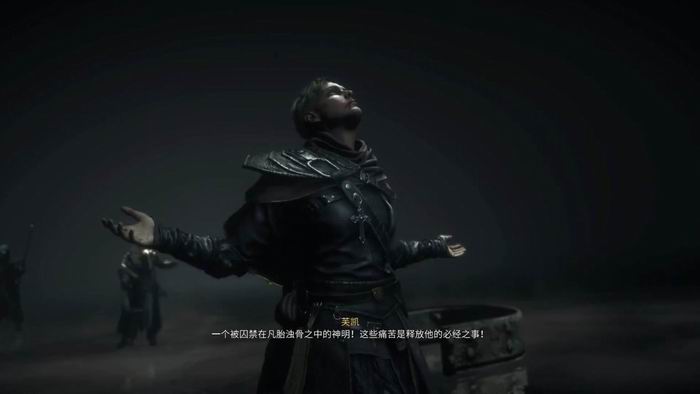
If the purpose of the Brotherhood is to take human beings as the center, the core issue of the order always revolves around "how to treat the Iraqi accuser", and their attitude towards the Iraqi accuser/god fluctuates repeatedly between "using its technology" and "worshiping its divinity". In the DLC of the Odyssey, the demands of the ancient defenders are to control mankind by using the artifacts left by the Iraqi accuser, so as to end the war and achieve the suppressed peace. In the story, Cassandra/Alexios was called a "bloodstainer" by Amokis, one of the defenders, and was hunted down, because the Iranian DNA in her/his body could help her resist the control of Eden Hallows. For the ruler, the uncontrollable person is a potential threat to peace. After that, it is probably because of the absorption of the remnants of the order religion, the teachings of the ancient order-makers deteriorated, and the ideal of the unity members changed from "ruling mankind with the artifacts of Iraq" to despising "incomplete mankind", dreaming of making "perfect gods" and "masters of mankind" walk on the earth again. In The Hall of the Soul, Fouquet, when facing avel who is revenged, falls down on her knees in front of the Sideger illusion that awakens the memory of the Iraqi plaintiff Tyre, and "sacrificing herself for the awakening of God" supports her to give her life without regret, although her behavior is paranoid and crazy in the eyes of others.
The appearance of the Brotherhood of Assassins comes from the reaction to the order and the stress to the ruling measures. From Darius, the designer of the first cuff-sword in the DLC of Odyssey, to Bajek, the protagonist of Origin, the fighters symbolizing freedom are all stragglers fighting in their own way to protect individuals who are oppressed by power. The fate of Bajek and Ai Ya is the epitome of all individual lives. Faced with the expanding power, they were caught in the tide of history and lost their homes and relatives. The "Hidden One", the predecessor of the Brotherhood they established, was the result of these individuals having to organize themselves in order to fight against the power that engulfed them.
The original intention of Bajek and the Invisible Man is to hide in the darkness to protect the weak. At this time, the "invisible man" is still a dystopian force, with no unified doctrine and purpose, and the motive of action is to protect some oppressed individuals. In other words, it is the life of flesh and blood that makes the invisible people act. Specific to Bajek’s motivation, from the beginning of the story, his son’s revenge, followed by the exploited civilians in Siva, and finally the Egyptian people under the hands of the invaders. Bajek’s journey began for a concrete and vivid life, not an abstract dogma of his own belief. But once the organization is formed, rules, doctrines and grades will inevitably follow. The ritual of "cutting off the ring finger" symbolizes the ideology of this dystopian force. Self-mutilation is a proof of courage and loyalty, which runs counter to the original intention of the invisible. Bajek, whose purpose is to protect, simply protects and helps the weak.
The Invisible Man has evolved into a Brotherhood in the Levant, marking the complete ideology of "freedom". The Crusade is of far-reaching significance in real history, because it is the first large-scale ideological war in the recorded history of mankind and the collision of two grand narratives. Ubisoft magic change recorded this period of history, but kept its core ideology. At this time, it has become the assassin organization of the Brotherhood and the freedom it represents. It is no longer a dystopian resistance force, and like the Templars, it has planned an ideal country that conforms to its own ideology, from caring for specific individuals to caring for an abstract group. "Freedom" itself has become a grand narrative.

Fig. 1 At the end of Origin, Bajek left the emblem of his dead son, and the trace left on the beach became the symbol of the Assassins’ Brotherhood. This also indicates the development of the assassin’s program of action from concrete (revenge for the dead son) to abstract (creed).
Artell improved the sleeve sword and abolished the finger-breaking ceremony, which echoed his attempt to set things right for the brotherhood’s ideology: "It is not a ring finger removal, nor a false promise to heaven. We are responsible to the people, not to customs. " Artell was aware of the disadvantages of ideology, and his notes recorded his reflection on the fraternity system:
There are three ironies in the rules of the assassin organization: we pursue peace, but we use assassination; We advocate lifting the shackles of thought, but we demand complete obedience to tutors and rules; We expose the dangers of blind faith, but we are believers ourselves.
But his efforts did not achieve the desired results. It is not difficult to see from the plot of Yano joining the Brotherhood in the Great Revolution that the pursuit of ritualization by assassin organizations is increasing instead of decreasing.
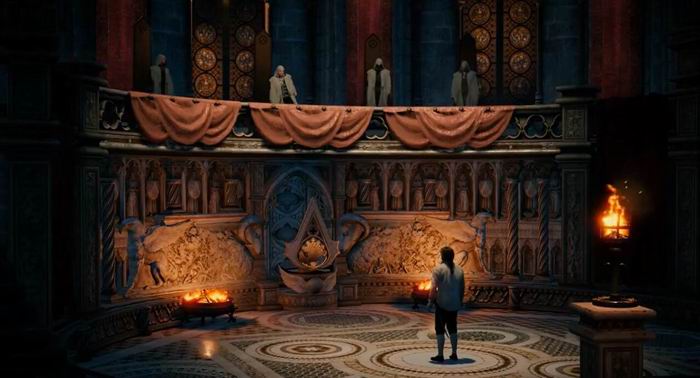
Figure 2 The stronghold of the Assassin’s Brotherhood in the Great Revolution is set in the holy chapel, with grandiose decoration, four high-ranking assassin instructors reciting the creed, watching Yano take hallucinogenic medicinal liquor and completing the initiation ceremony. As for the Templar, its teachings have developed into the embodiment of enlightenment in modern times. Enlighteners, who deeply felt that people were stupid, tried to use science and reason to open people’s wisdom and unite a group of scattered people. The doctrine of the Templars implies "the end of history": the wheel of history rolls forward, crushes the old pedantry, advances towards a new society, and one day it will reach the ideal end. The end point of history is a perfect world, which operates according to a set of universal values. Rational and intelligent voters take the initiative to join this utopia, while ignorant people directly use the Golden Apple (Eden Hallows) to control if they cannot understand this set of perfect universal values.
By misappropriating and adapting the original works, the world constructed by Assassin’s Creed series has lost its mystery for the "God" believed in religion and mythology, and has been replaced by the higher life of prehistoric civilization. With the concept of "Yi v. Man", Ubisoft successfully disenchanted the creator in myth and religion in reality, and there is no longer a real "God" in the world view of Assassin’s Creed. Ubisoft’s adaptation has divided into two directions, corresponding to the re-creation of monotheistic beliefs in the real world and folk myths and legends.
The appropriation of religious elements in the early generation of Assassin’s Creed is very simple. The religious elements of "Brotherhood/Islam" and "Knights Templar/Crusade" in the special historical background have been diluted, and the main contradiction between them is the pursuit of "order and freedom". After the work became a popular series, Ubisoft intended to construct a unique world view, and the sense of existence of "the first civilization" and "Iraqi people" increased sharply in subsequent works. Echio trilogy, which was released later, was plotted by the plaintiff as a hidden line outside the modern and ancient plots, which can be said to have harmed Echio’s life.
In recent years, the mythological trilogy Origin, Odyssey and Hall of the Soul described the ecology of the first civilization in more detail. In addition to Jupiter, Minerva and Juno, the "gods" in Greek mythology and Nordic mythology all appeared as plaintiffs. Ubisoft has constructed a world view that is different from the real myths and legends: the "gods" in fairy tales are all higher life claimants who once lived on the earth.
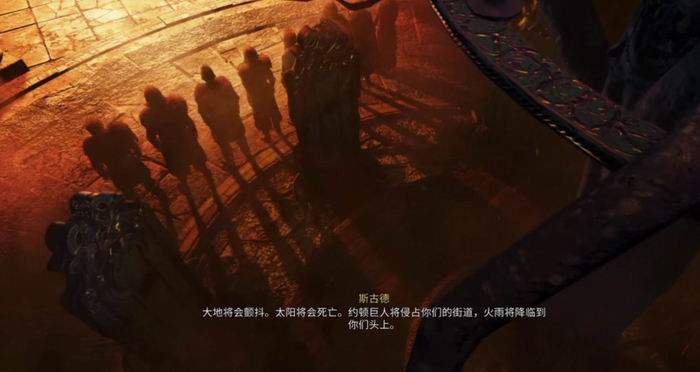
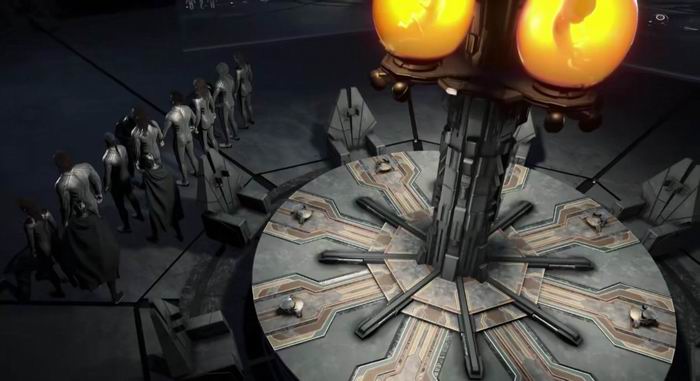
Fig. 3 The above picture shows the "Twilight of the Gods" in the dream of Ivor after she was hypnotized by drinking drugs in the Hall of the Soul, with a strong Nordic myth filter because of her pre-knowledge. The following picture shows the real Iraqi plaintiff’s experience after unlocking the hidden plot.
Facing the real religion, Ubisoft turned its attention to other places after the adaptation of the first generation. Although "Adam and Eve" has been explicitly mentioned in the Echio trilogy when introducing the history of the Iraqi people, even Jesus has been transformed into "Saint" Eta by magic. Ubisoft still intentionally or unintentionally avoids saying "Who is God?". In a series of subsequent works, the Brotherhood of Assassins and the Knights Templar gradually broke away from the connection with Islam/Catholicism in the early generation and turned into a regional multinational organization.
Until "The Hall of the Soul" set the background story as the Viking invasion of Britain in the dark ages, the belief problem between Christians and outsiders became acute. Ubisoft rarely talks about monotheistic belief itself, and introduces the thinking of "how human beings should face their own creators" by shaping the role of Alfred the Great. Alfred was set as the leader of the ancient dimensional order in the game, and inherited the title of "the master of knowledge" from his father and brother who passed away one after another. He knew the true origin of human beings-slaves made by Iraqi people, and he faced the "truth" with a different attitude from other believers. He has no intention of maintaining the order, and rejects the doctrine of bringing the perfect "God" back to the world to rule mankind again.
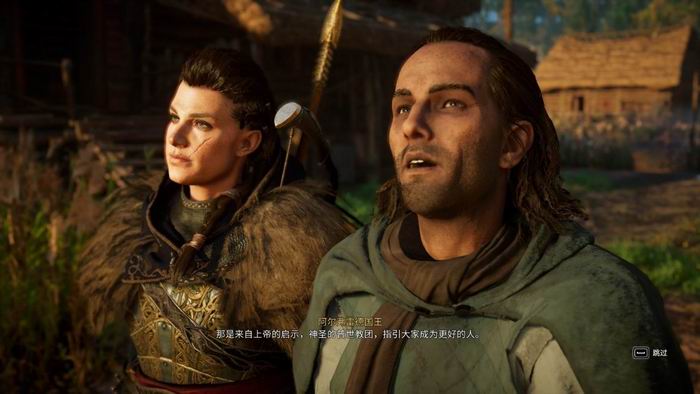
Fig. 4 After anonymously assisting Ivor to kill all the members of the ancient dimensional order, Alfred confessed to her that he was the leader "the master of knowledge" and promised to establish a "sacred universal church" with Christian faith to "guide everyone to become better people". Alfred’s idea of a universal order was the embryonic form of the Knights Templar.
Alfred is not only the last ancient dimension orderer, but also the bud of the Templar. He led the transformation of the cult, and also implied the transformation of human pursuit of order: slave owners above themselves became the past tense, and abstract beliefs were accepted by the public. As a devout Christian, he fully promoted the Christian doctrine. The man-made god "God" abandoned the "human nature" of Iraq and led mankind with the pure divinity of "omniscient, omnipotent and all-good". "God" is no longer a concrete individual, but an abstract absolute spirit and idea. Alfred’s title of "master of knowledge" also implies this platonic metaphor of an ideal country-in an ideal society, the "king of philosophy" becomes the ruler and the people become better people under the guidance of "ideas".
At this level, Alfred created by Ubisoft is pious and at the same time the most anti-religious, because religion depends on faith, and faith is irrational. From the argument between Ivor and the Queen of France in the DLC of the Hall of the Soul, it can be seen that blind believers don’t need to think about God’s belief: Ivor told the Queen that he saved her from the little virgin, while the Queen firmly believed that Ivor’s appearance was God’s will, and God’s will only needed to be obeyed without doubt. Alfred replaced the "true god" with the "false god" who is all-knowing, all-powerful and all-good. He kept rationality for himself, ruled most people with irrational religious beliefs, and established the status of man as the subject. This not only echoes the discovery of human beings in the post-Renaissance in the dark ages, but also lays the foundation for the purpose of the subsequent Knights Templar: Iraq v. technology serves the rule, and people use Iraq instead of loyalty to civilization. To some extent, this is the return of the purpose of the Templars to the early ancient order-keepers. The difference is that the ancient order-keepers in Persia were attached to the royal power and lacked unified abstract beliefs.
The decline of freedom
No matter how it evolves, the idea of the cult is always closely related to the first civilization, and everything serves "order", or the education and control of the people, which determines the cult’s elitist position and the demand for grand narrative. Specific to some individual members of the cult, they all seem to shine with the goodness called rationality. Alfred’s ideal of universal education, Haytham Kenway’s efforts to build a new government, Alice’s sacrifice to clean up the extremists … As a group organization, the cult always represents strong rule, whether through power, religion or contemporary multinational companies.
The Brotherhood advocates the freedom of individual life, and "everything is empty, everything is allowed" is the slogan to break the unified belief, and it also conforms to the spirit of postmodernism against authority. However, the struggle with the cult made the Brotherhood must also unite into an organization, and the birth of group organizations inevitably caused new oppression on individuals. There is a hierarchical organization within the anarchist brotherhood, and the anti-dogmatic ideal itself is dogmatized. The transformation from the "invisible man" to the "brotherhood" confirmed the deterioration of "freedom", the original intentions of Bajek and Ai Ya were gradually forgotten, and the Brotherhood of Assassins became a representative of a force actively involved in history.
After the myth trilogy, the fate of human beings seems to be more and more pessimistic. For human beings, the Iraqi accuser is an unattainable other, who has devoted his life to the protagonists who pursue freedom or peace, and has involuntarily become a tool for the Iraqi accuser to realize his own rejuvenation. In the face of the grand narrative with devouring power, man is a means rather than an end. In the period of the first civilization, there were pro-humanity and slavery factions within the plaintiff, but even the pro-humanity plaintiff never really respected human freedom-Altea could turn against her compatriot Juno for the sake of mankind, but it did not prevent her from using Leila’s life to resurrect her lover Loki. The love of the pro-human Iraqi accusers for human beings is not equal and respectful love, but the condescending love of "I like people as people like dogs".
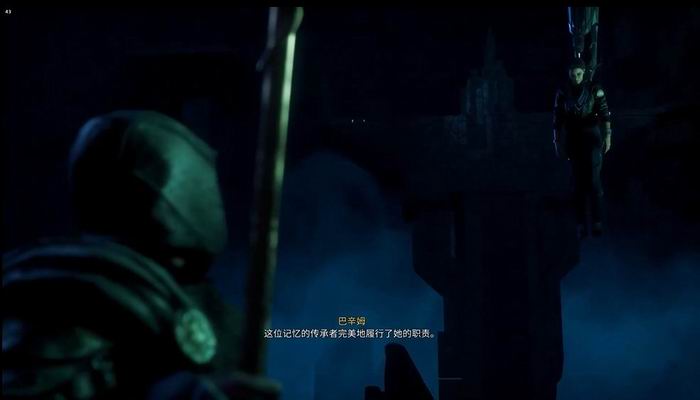
Fig. 5 In the modern plot of The Hall of the Soul, the plaintiff, Altea, used Leila to "send a staff" to revive Loki and let Leila die in the world tree. For the plaintiff, Leila is just a "inheritor of memory who has fulfilled her duties", and a tool that can be used conveniently and put down at any time.
The struggle between "order" and "freedom" is a paradox. The former leads to control while the latter leads to chaos. The appeal of order-control, is also changing masks with the times. Although the world of Assassin’s Creed’s modern plot is overhead, it is generally based on today’s real world. For today’s human beings, it seems that we live in the most "free" era: convenient network, developed logistics, intelligent Internet of Things, diversified entertainment … The religion that suppresses the people by force and dominates believers by faith has become the target of condemnation or a choice among many lifestyles, even if it has not completely disappeared. Mankind has experienced a wave of frenzied attempts to break all the shackles. Race, nationality, gender and belief are no longer excuses to limit what a person should do, what he can’t do and what he must do-the era of "everything is empty and everything is allowed" seems to have really arrived. However, in this new era, when a hundred flowers are blooming and the demons are dancing, the Assassin Brotherhood in the modern plot is almost annihilated.
As Han Bingzhe said, "Power in the digital age is no longer oppressive". In today’s life, it is difficult for us to feel the suffocating oppression like the inquisition. The spokesmen of order are no longer monarchs and popes, and even the order itself has been dissolved, but human beings have not achieved the expected freedom. Power, or control, has changed into an incarnation. The Knights Templar in the new era has become a multinational entertainment company Abstergo, which publishes games, uses players to search for Eden Hallows, and locates saints with pioneering blood from players. The Brotherhood of Assassins can deal with powerful kingship, religion and exploiting factory owners, but it is losing ground in front of entertainment companies, which accords with Rousseau’s prediction that the more civilized human beings are, the less free they are.
Institutional religion is shrinking. Even in Christian countries, the proportion of collective religious activities such as baptism and worship in people’s daily life is decreasing year by year. Religion (including politics) has been entertained, turned into symbols and fragments, and become the object of mass entertainment and cultural consumption. It is in this atmosphere of entertainment to death that religion is reborn in mass entertainment in this way of "transforming into a cultural symbol". Accompanied by this, the public voluntarily gives privacy in exchange for the convenience of life in the information society. "Even free will itself has been manipulated."
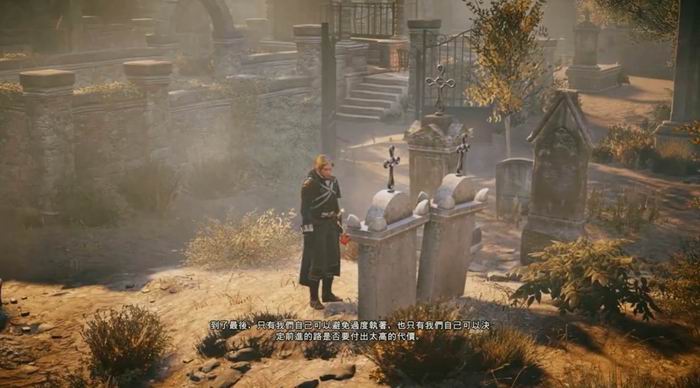
At the end of the Great Revolution, Yano deeply reflected on the meaning of "freedom". In his monologue, he said:
The dogma of the Assassins’ Brotherhood teaches us that we can do anything. I thought this meant that we were free to do what we wanted, in order to pursue our ideals at any cost. Now I understand that not all lines are allowed, but the doctrine itself is a warning. Ideals are too easy to compromise with dogma, while dogma makes people crazy. No power is higher than our own judgment. There is no supreme master watching to punish our sins. In the end, only we can avoid over-persistence, and only we can decide whether the road ahead will cost too much.
Freedom does not mean going its own way on the surface, but also means choosing and bearing the consequences that follow. In this way, "freedom" has become a heavy burden, and submission is much easier. After all, it is too heavy for ordinary people to make "own judgment" and "decide whether to pay too high a price for the way forward". Like the people in "Strange Tales of the Goddess 5" who voluntarily give up thinking and follow the Holy Grail in the impression space, everything is so convenient in the information age, and it is so relaxed and comfortable to follow the control of big data compared with self-judgment. Modern people voluntarily give up their freedom.
The spirit originally represented by the Assassin Brotherhood is precisely questioning. Questioning authority, questioning everything that is taken for granted, thinking, judging and bearing the burden of reason. This is a kind of painful freedom, and pain is avoided by modern people. So everyone went to Abstergo/ Ubisoft and volunteered to join the entertainment wave.